


The UK Government should give serious consideration to supporting fixed links between Scotland’s islands to tackle "connectivity challenges", according to a new report from the House of Commons Scottish Affairs Committee.
The report examines the potential for bridges and subsea tunnels to improve connectivity for island communities, including proposals for crossings in the Western Isles which could transform travel between Harris, North Uist, South Uist and Barra.
It calls on the UK Government to engage actively with proposals where there is a wider national interest, despite transport being a devolved responsibility.
The findings add weight to calls for a fresh look at how the Western Isles is connected, following years of disruption to ferry services and concern over the cost and reliability of island travel.
In particular, the report considers proposals for fixed links across the Sound of Harris, between Harris and North Uist, and the Sound of Barra, between South Uist and Barra. Both have been identified in the Scottish Government’s Islands Connectivity Plan.
The estimated cost of a Sound of Harris crossing is between £109.6 million and £145.1 million. The report also notes that a further £135 million could be required if the project were combined with tidal or wind energy generation, with the intention of offsetting costs through energy exports.The estimated cost of proposed inter-island tunnels in Shetland is £1.5 billion.
However, no funding has been established for the Western Isles proposals and no further action has yet been taken. Further consultation with island communities is expected.
The committee's report does not endorse any particular project but does stress that decisions must be led by the communities concerned. The report continues by arguing that the potential benefits of fixed links deserve serious consideration, including improved access to services, stronger local economies and better prospects for retaining population.
The committee points to evidence from other island communities, including Eriskay, where the population fell by about 60% in the 50 years before its causeway opened in 2001. Over the following 20 years, the island’s population grew by almost 20%.
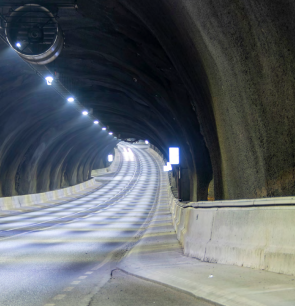
The report also considers the experience of the Faroe Islands, where an extensive network of bridges and tunnels has been developed. Evidence from local stakeholders suggests these links have helped support population retention and growth, although the report does not establish that fixed links alone caused those changes.
It also argues that assessments of proposed projects should look beyond direct financial returns to take account of their wider social and cultural benefits.
Examining the current challenges to connectivity the report offers future projections on the state of the islands' ferry service and contains a litany of descriptions of connectivity failures described as "unreliable" and "intolerable" while painting a picture of an ageing fleet beset by delays and cancellations.
Witness statements from local people and businesses – gathered on the Committee's visit to the Western Isles – attest to huge financial and personal consequences of ferry disruption with just one example offered by The South Uist Business Group that estimated that local businesses collectively lost approximately £1.4 million over a six-week period in 2026 due to ferry disruption.
However, despite the issues with the current fleet, the report accepts that some form of ferry service would be necessary even if the tunnels were to be given the go-ahead.
Chair of the Scottish Affairs Committee, Patricia Ferguson MP, said: "Scotland's island communities deserve better than their unreliable ferry services, which place intolerable limitations on islanders going about their daily life – from accessing healthcare and education, to running businesses. Our report finds that, where viable, fixed links like bridges and tunnels could bring transformative benefits to these communities."
And the report records that simply replacing vessels with newer ones may not be sufficient to address the islands’ long-term connectivity challenges with CalMac’s Fleet Director, Louis de Wolff, explaining" "climate change is contributing to an increase in weather-related disruption and ferry cancellations".
However bleak the ferry situation, the committee acknowledges that tunnel link projects bring risks as well as opportunities. Better connections could place additional pressure on housing, roads, schools and other local services, the MPs say, while concerns have also been raised about the possible effects on island identity and the centralisation of services. The long-term costs of maintaining bridges and tunnels would also need to be considered.
The report emphasises that fixed links would be suitable for only a limited number of shorter crossings and would not remove the need for a reliable ferry network.
Most islanders would continue to depend on ferries particularly on longer journeys between islands and mainland due the islands' "geography, population size and remoteness" the report states, and the committee warns that the prospect of tunnels or bridges must not distract from the urgent need to improve ferry services.
"Of course, any decision to pursue these projects rests first and foremost with islanders themselves, the Labour MP for Glasgow West stressed. "It's also crucial to recognise that bridges and tunnels would complement, not replace, ferry services. For many, ferries will remain essential – improving their reliability must remain an urgent priority.
"The UK and Scottish Government have an important role to play in supporting projects. If proposals go ahead, our report shows that local authorities and communities would benefit enormously from government support."
The report follows comments by First Minister John Swinney during his visit to the Western Isles in August, when he expressed support for considering the possibility of subsea tunnels.
As reported by We Love Stornoway on 12 August in its article, “Swinney opens door to Isles subsea tunnel links”, Mr Swinney told a public question-and-answer meeting at Tarbert Community Centre that he was “very open to considering the options” for tunnels.
He also said there was a “very strong case” for their development, pointing to experience elsewhere where fixed links between islands had been associated with stronger local populations.
Mr Swinney highlighted work being undertaken by Shetland Islands Council, with Government funding and support, to examine the practical, economic and financial challenges of subsea tunnels. He said lessons from that work could potentially be transferred to other parts of Scotland.
Mr Swinney's beliefs seem shared by The House of Commons Scottish Affairs Committee report that now argues the UK Government should consider how it might support such schemes. That support it reveals need not be limited to direct funding and could include engineering expertise, loans, guarantees or arrangements to share financial risks.
For more background and a first-person view of tunnels and how they operate on The Faroe Islands and why Managing Director of Stornoway Media Centre thinks they may prove unsuitable for the Western Isles click here.
