


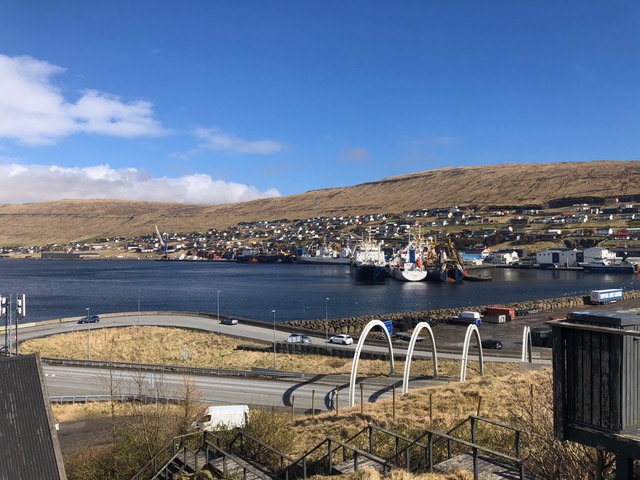
Long-time Islands journalist Fred Silver spent a week in the Faroe Islands recently…and looked closely at the question of whether the Faroes’ massive, decades-long investment in road tunnels has lessons for the Western Isles. His conclusion: they would not be possible here. Here he explains why.
As the controversies about transport links to, from and between the Western Isles have raged in recent years, one constant reference has been to the experience of the Faroe Islands where modern tunnels have largely replaced ferries…and, less widely reported, tunnels though hills and mountains have reduced journey times on land as well.
Former Western Isles MP Angus Brendan MacNeill is well-remembered in the Faroes for his astonishment that there was full mobile reception in tunnels many metres before the seabeds of the fjords.
The longest tunnel so far is around seven miles in length…and all of them involve either curving through hills or dipping down under the seabed so as to make it impossible to see the end of the tunnels until you are near them.
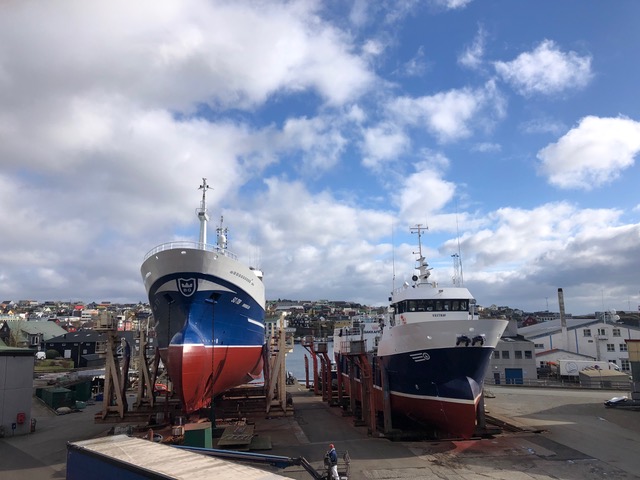
On the face of it, the Faroes make a good comparison with the Western Isles – 18 islands, one uninhabited, excluding islets and stacs; a fishing industry and a fish farming industry; landscape formed by centuries of sheep-rearing; Viking past; and unsuccessful in locating oil and gas under nearby seas despite decades of trying.
But a deeper examination shows why the Western Isles would not be able to follow in the footsteps – or wheel tracks – of the Faroese.
Flashback: Big day for Faroes as new tunnel opens
A key point is the costs of the tunnels…as a comparison, the Lower Thames Crossing, east of London, is a proposed 14.5-mile road project, featuring the UK's longest road tunnel – only 2.6 miles. More than £1.2bn has been spent merely considering the options and organising the project…before any work even began. By contrast, the now-famous trio of tunnels totalling around 9 miles near Tórshavn in the Faroes – including the photogenic undersea roundabout – cost around £350m in total.
A Faroese engineer – who has also worked on UK projects – put it simply. When the Faroes government decides on a project, that’s it. Decision made, deal done. The Parliament in the Faroes – or Løgtingið – has only 33 members – to run the whole country of around 55,000 people. This contrasts with 29 councillors on Comhairle nan Eilean Siar just to run local services for 26,000 people.
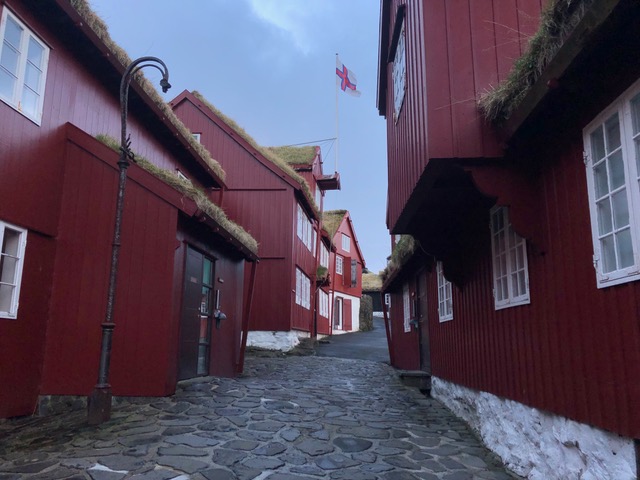
And the Løgtingið has almost total control. To put it simply, you can think of the relationship as the Faroe Islands being in full control of their own house (domestic policy), while the keys to the front door (defence, foreign affairs, and monetary policy) are held by Denmark. However, the Faroese also have a key to the side gate, allowing them to engage directly with the outside world in many areas.
This arrangement, established by the 1948 Home Rule Act and significantly expanded in 2005, makes the Faroe Islands one of the most autonomous territories in the world that is not a fully sovereign state. They are also outside of the EU, like the Isle of Man and the Channel Islands.
At present a further tunnel is under consideration, the longest and most expensive so far. This 15-mile undersea tunnel would link the island of Suðuroy with 4,500 people to Sandoy which was itself linked by tunnel to the main island of Stremoy just over two years ago. The projected cost is the equivalent of around £542 million. A project appraisal for this has just been approved by all parties in the Løgtingið – and the Løgtingið will assess the outcome within the next two years. If it is approved, that will be it. Contract issued, work under way.
Another key point is who is using the tunnels…in the Faroes there is predominantly local use, not visitors. Yes, the total number of tourists and visitors has soared in the Faroes over the past five years – but the total is still only about 130,000, half of whom arrive by air, explains Guðrið Højgaard, who is the Director and CEO of Visit Faroe Islands, the official tourism board. She has led the organisation since 2012, focusing on building sustainable, high-value tourism through innovative and award-winning marketing campaigns.
And the population of the Faroes is growing – it is expected to surpass 57,000 next year – with unemployment below 1% and a constant flow of migrants from across the world needed to fill a whole range of jobs.
In contrast, visitor figures for the Outer Hebrides, are heading for 350,000 a year, according to official statistics, while the native population is dropping – it is projected to decrease from 26,120 in 2022 to approximately 25,190 by 2032. And UK-wide immigration restrictions mean that gaps in the local workforce cannot be filled.

In addition, the Faroes have been organised in much the same way for more than 1,000 years – the Løgtingið came into existence in 825 – and continued except for a break between 1816 and 1852 when Denmark reduced the Faroes to county status. By contrast, the Outer Hebrides were not even part of Scotland until 1266, and Comhairle nan Eilean Siar became the first single authority for the Islands only in 1975.
The annual budget of the Faroese Government for organising the affairs of its islands is around £1.8 billion – of which most is generated in the Islands with a block grant from Denmark that totals only around £74 million. By contrast, the CnES latest budget is a mere £125 million – of which less than £18m is raised locally.
Flashback: Undersea roundabout opens
The Faroes has a large international industrial sector with Bakkafrost, the fish-farming giant, employing around 1,100 people in the Faroes themselves, more than entire Faroes tourism sector. (Bakkafrost is reputed to be the eighth largest salmon farming company in the world). In addition, Hiddenfjord, a 100% Faroese-owned salmon farming company, employs approximately 275 in the Faroe Islands; and Norway’s Mowi employs around 75 there.

The Faroes is investing hugely in generating more visitors with plans to double the size of the airport at Vágar to cope with 1 million passengers a year. The airport is the hub for the Faroes own airline, Atlantic Airways, which has flights using Airbus planes direct to airports in Iceland, and Denmark, as well as to Edinburgh, Paris, Dublin, Barcelona, Mallorca and the Canary Islands, amongst others. Vágar is also served by SAS, Icelandair and a dedicated air cargo service.
For sea travellers, a much bigger passenger terminal and headquarters for Smyril Line is currently under construction at Molin in the Port of Tórshavn. The project is a partnership between Smyril Line, Tórshavn Municipality, and the Port of Tórshavn. The project aims to modernise the port, providing better facilities for both cargo operations and passenger travel to and from the Faroe Islands.

The Outer Hebrides are way ahead in terms of sheep numbers – despite the fact that the Faroes name means the “Sheep Isles’. There are around 80,000 sheep on the Faroes, compared to 143,000 in the Western Isles. However, the land area of the Faroes is only 540 square miles – compared, for instance, to Lewis and Harris alone with 840 square miles.
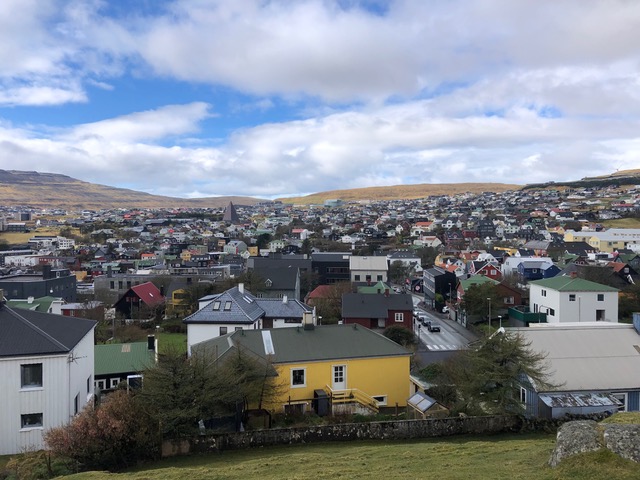
The geography of the Faroes, with the capital city Tòrshavn having almost 45% of the total population, lends itself to centralised organisation based in the capital. The ferry routes leave from there for Denmark and Iceland. Crucially, the major fishing port and business centre of Klaksvik – the heart of the offshore fishing industry – is located on the island of Borðoy which is two major tunnels away from the capital Tórshavn, on a route that also includes the major port of Runavik, creating a huge two-way demand for transport services on the road links created since tunnelling began in 1963.
Some of the original tunnels, now upgraded, were single track. And many of the tunnels are unlined…with traffic racing past the bare basalt rock which forms the islands.
And all of this has been paid for by the Faroese government and the people of the islands…using loans and user tolls (collected automatically without toll booths etc) to cover the costs not met by their own national investment fund.
Contrast this situation with the Western Isles. Any tunnel plan would require the approval and financial support of multiple levels of government – and interaction with a manic basketful of competing official and semi-official agencies representing environmental, transport, historical, and industrial interests. And it would require the unanimous – or at least near unanimous – approval of members of Comhairle nan Eilean Siar and the general population.
Sorry, folks, that’s simply unachievable, in my view.
