


An Orca found on a South Uist beach in 2015 is now believed to be one of the oldest male killer whales ever recorded.
Following analysis of his tooth layers, researchers from Scottish universities and museums now believe the creature was at least 65 years old.
They are basing their conclusion on the absence of radioactive fallout traces from atmospheric nuclear weapons tests, conducted in the mid-20th century, in the oldest tooth layers.
The absence of radioactive traces in the oldest layers of the orca’s teeth suggests he was born prior to nuclear weapons tests.
Each growth layer in a whale’s tooth is thought to form annually, like the rings of a tree. The researchers tested that assumption for the first time in sperm whales and killer whales by looking for bomb radiocarbon.
These harmless trace radiocarbon signals, together with stable isotopes, provided clues about where the whales called home, what they ate, and how long they lived. Conclusions drawn from those clues have enabled the researchers to roll back the years to uncover details about the whales’ lives.
Their findings have now been published in the journal Frontiers in Marine Science.
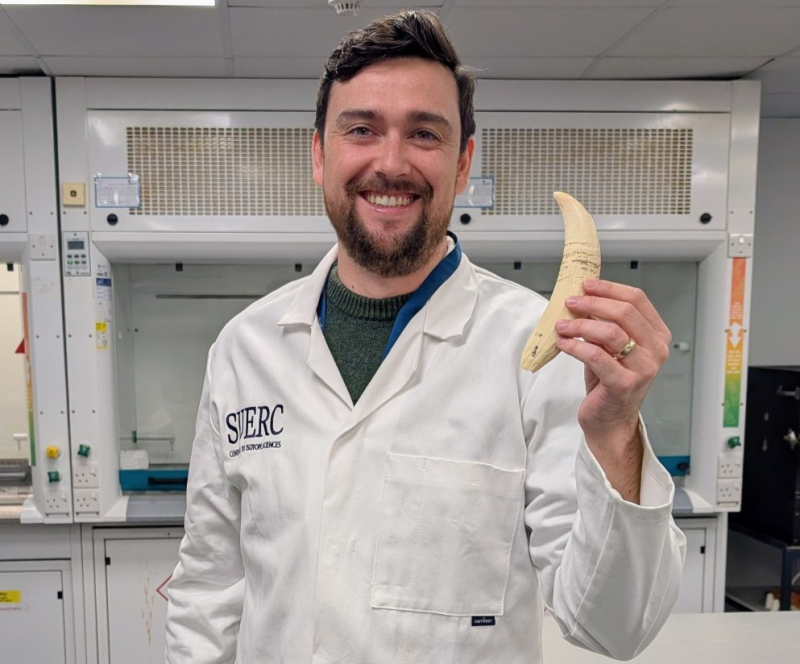
The research was led by scientists at SUERC: Centre for the Isotope Sciences in partnership with researchers from the Universities of Glasgow, Edinburgh and St Andrews and National Museums Scotland.
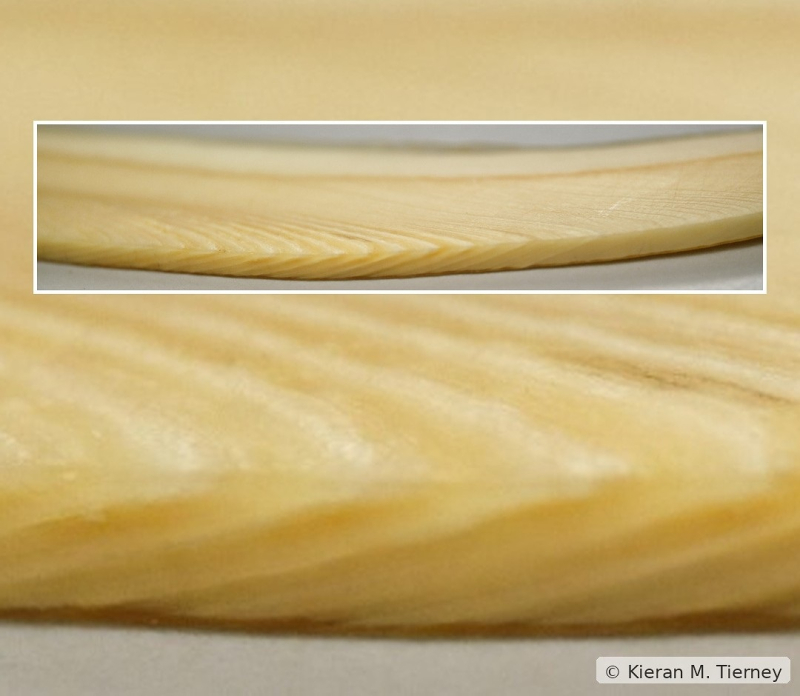
The team used SUERC’s accelerator mass spectrometer to analyse the relative abundance of radiocarbon found in each layer of the whales’ teeth. Large amounts of radiocarbon were released when atmospheric nuclear weapons testing began in the mid-20th century, and the fallout from those tests entered ecosystems both on land and in the sea.
Lead author of the study, Dr Kieran Tierney, of SUERC: Centre for the Isotope Sciences, said: “The effectiveness of conserving and managing marine mammal populations depends on how well we understand their life histories and ecology.
“This study looked at five whales, so its scope is limited, but it provides new information which we think may be useful to help conservation efforts in the years to come. It could help improve how we interpret age and life-history records in these animals.
“We’ve provided new evidence to show that tooth growth layers are deposited annually, but this is perhaps only reliable up to a certain point in their lives. We have identified a particularly old male killer whale who was likely significantly older than the growth layers suggest.
“By combining radiocarbon with stable isotope analysis, we can get a much richer picture of how these animals lived. We hope that this study adds a useful piece to our ever-growing understanding of the life-histories of these two whale species.”
The UK, Russia and the US were three of the countries that conducted above-ground nuclear weapon tests before they were prohibited in 1963.
The tests, carried out at locations including the Russian Arctic and the South Pacific, released vast quantities of radioactive particles, some of which entered marine environments and contaminated sealife.
Male orcas are thought to have an average life expectancy of 30 years, but this is based solely on studies of the species found in the Pacific Ocean. Females appear to live into their 80s and beyond.
Image content - supplied
