


The reported decision by the BBC to axe its broadcasting of the World Pipe Band Championships is a retrograde step that is putting up barriers which broadcasting spent much of the 20th Century breaking down.
That is the view of one music historian who contacted welovestornoway to echo concerns about the impact the decision would have on disabled fans and other fans and families of players tuning into performances from home.
Stacy Jarvis is a culture and classical music writer, music historian and violinist based in Manchester who regularly writes on the intersections between music, politics and society.
She was moved by our previous story of the axed broadcast and the comments from Lewis and Harris Piping Society chairman Dr John Smith who said that, as a disabled piping fan, the BBC broadcast was latterly been the only way he has been able to experience the event, which takes place annually on Glasgow Green.
The questions about accessibility go beyond disability alone, Stacy said, and particularly relate to the geographical and financial barriers. And she stressed the difference between an event being available digitally and actually being accessible to an audience.
Here is her commentary, supplied to welovestornoway:
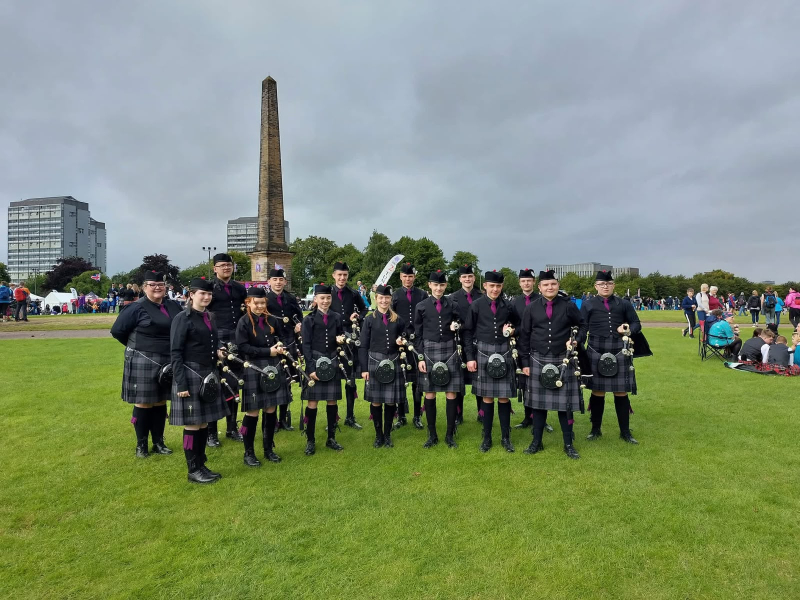
When the Lewis and Harris Youth Pipe Band sets off from the Outer Hebrides for the World Pipe Band Championships in Glasgow, its journey doesn’t end at Glasgow Green. Families, friends and supporters who have stayed behind on the islands can watch the coverage from home.
For them, television is not simply a convenient alternative to attending in person. Travelling from Lewis and Harris to Glasgow already means a substantial journey, before even considering the cost of transport, accommodation and time away from home.
Disability, age, health conditions or caring responsibilities can make that journey harder still. That is why concerns about the future of the BBC’s coverage of the World Pipe Band Championships raise a much bigger issue than the survival of a particular television programme.
What does it mean for a cultural event to be truly accessible? Accessibility is often discussed primarily in the context of disability, and rightly so. But geography can prevent people from participating too. So can cost, age and caring responsibilities.
And in an increasingly digital broadcasting landscape, internet access, suitable devices and confidence using digital technology can determine who is able to take part.
As a music historian, I find this particularly interesting because broadcasting spent much of the 20th Century breaking down exactly these kinds of barriers.
Before radio, hearing a musical performance usually meant being in the same place as the musicians. Concert halls, theatres, churches and public gatherings attracted audiences partly through physical proximity.
Broadcasting changed the relationship between music and place. A performance taking place in one city could suddenly reach listeners hundreds of miles away. Later, television allowed audiences not only to hear performers, but to see them. For musical traditions deeply rooted in particular communities and places, that was enormously important.
The World Pipe Band Championships may take place at Glasgow Green, but its cultural audience has never been limited to those standing around the competition arena.
The 2026 championships brought together 211 bands from 14 countries, including youth bands.
Families follow individual performers and ensembles. People who have moved away can remain connected to the communities they left behind. Piping enthusiasts elsewhere in Scotland and around the world can participate in an event rooted in one very particular place.
For island communities, the distinction between where an event happens and where its audience lives is particularly important.
Moving cultural coverage online is therefore not necessarily as simple as saying that viewers can watch a livestream instead. Livestreams can be extremely valuable. They can reach international audiences, provide specialist coverage and allow performances to circulate far beyond the physical event. But availability and accessibility are not the same thing.
A scheduled television broadcast reaches viewers in their homes. Families know when to gather round the telly, and viewers know that thousands of other people are experiencing the same event at roughly the same time.
Online streaming asks something different of its audience. People need to know that it exists, know where to find it, have a suitable device and internet connection, and actively seek it out. For younger and digitally confident audiences, that difference may seem insignificant.
For others, it can decide whether they watch at all.
When the format changes, it is not enough to ask whether an event will remain available somewhere online. We also need to ask: who will be able to find it?
For a family in Lewis or Harris watching a young piper perform at Glasgow Green, broadcasting is not merely coverage of someone else’s cultural event. It can be the bridge between the event and home.
Musical heritage survives because people continue to perform it. But it also survives because communities can witness it, recognise themselves in it and pass their enthusiasm from one generation to the next.
Broadcasting has helped make that possible across distances that once excluded enormous numbers of people. The technology through which we watch will inevitably change. The challenge is to make sure that, when it does, the audience doesn’t quietly become smaller with it.
