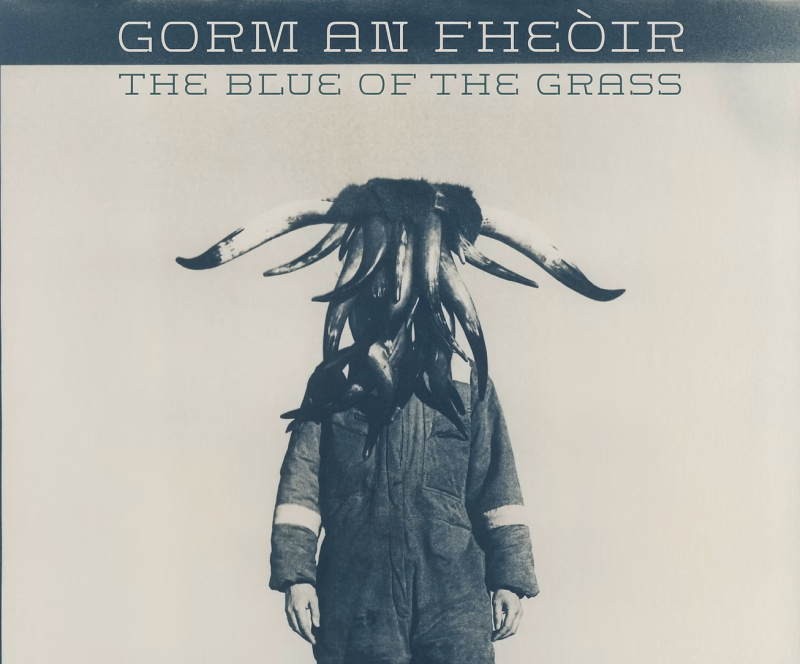
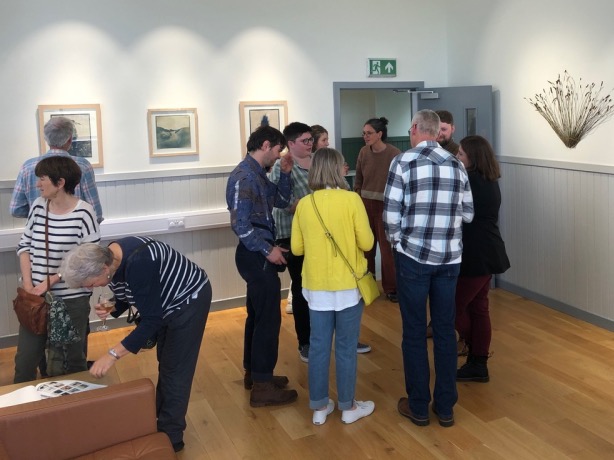
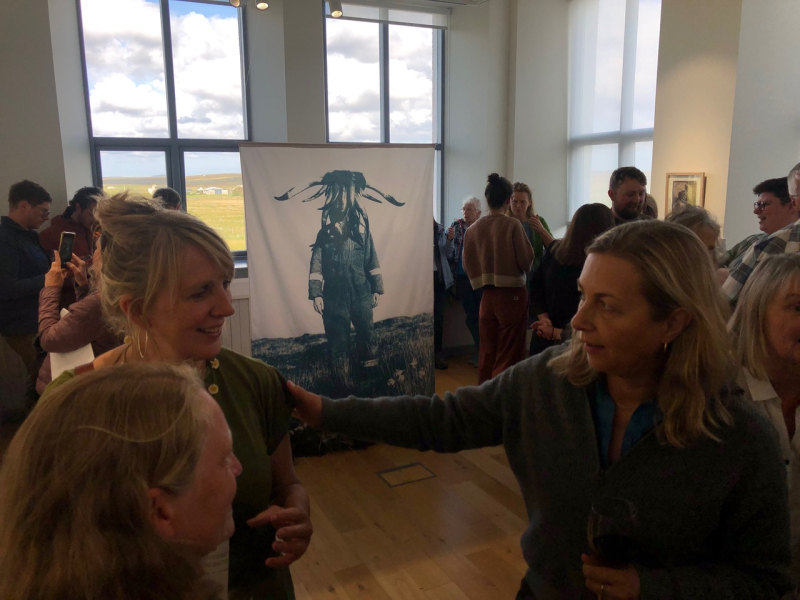
A major artistic event in Grinneabhat, Bragar on Saturday evening (June 7) brought together Coatbridge, Donegal and Gress in an enthusiastic public welcome for an unusual exhibition of photographs which combine mask-making, photography and medicinal island herbs and plants.
This is the work of the first recipient of a Harry Kerr Photography Bursary, Danielle Macleod, now based in Gress. Danielle used the award to create what is described as “a compelling new body of work”, which is being exhibited at Grinneabhat this summer.
Harry Kerr was a gifted artist and tireless champion of emerging photographers. In May 2024, on the second anniversary of his passing, Artlink in Fort Dunree, Donegal, launched the Harry Kerr Photography Bursary, an annual award supporting early-career photographers in developing new work. The bursary honours Harry’s creative legacy and his deep belief in nurturing future generations of artists. To ensure the bursary can continue through to 2029, Artlink aims to raise at least €20,000.
Born in Coatbridge, Scotland, in 1960, Harry Kerr left a lasting impact on the Donegal arts scene and wider community, after making Donegal his home over 20 years ago. Harry and his life and work partner, Martha McCulloch founded ‘The Memory Factory’, where they documented significant moments in the lives of many locals over the past two decades.
Martha, who spoke movingly at Grinneabhat about the project, said: “We created the bursary to carry Harry’s legacy forward. This auction is a celebration of his life and a way for the creative community to ensure his passion continues to inspire and support others.”
The projects Gofundme page explains: “As an alumnus and former staff member of the respected Glasgow School of Art, Fine Art Photography Department, Harry's impact on the artistic community was significant. From being the recipient of the first Richard Hough Bursary to creating exhibitions like 'Sense and Science', Harry's contributions were as varied as they were important. His influence extended beyond his own work; he shared his passion for creative expression and excellence in execution throughout his life. He was always generous with his vast photographic skills and knowledge, facilitating opportunities for students and artists and fostering a culture of collaboration and growth.
“Harry used many “cameras”. He made digital, analogue and iPhone photographs as well as documentary films. He revisited the American west to make photographs with a heavy-duty large format camera. He made playful, poetic snapshots with a plastic toy camera. In an age of rapidly increasing technological development and image saturation what mattered was not the tool but what was being communicated - the art of “making” photographs; photography that increases our emotional knowledge, that could capture the complexities of life and encourage us to look anew at the world.”
The bursary is particularly aimed at supporting early career photographers, on the north-west coast of Ireland and Scotland, from Strandhill to Stornoway, who may have limited financial resources but demonstrate exceptional talent and commitment to their craft.
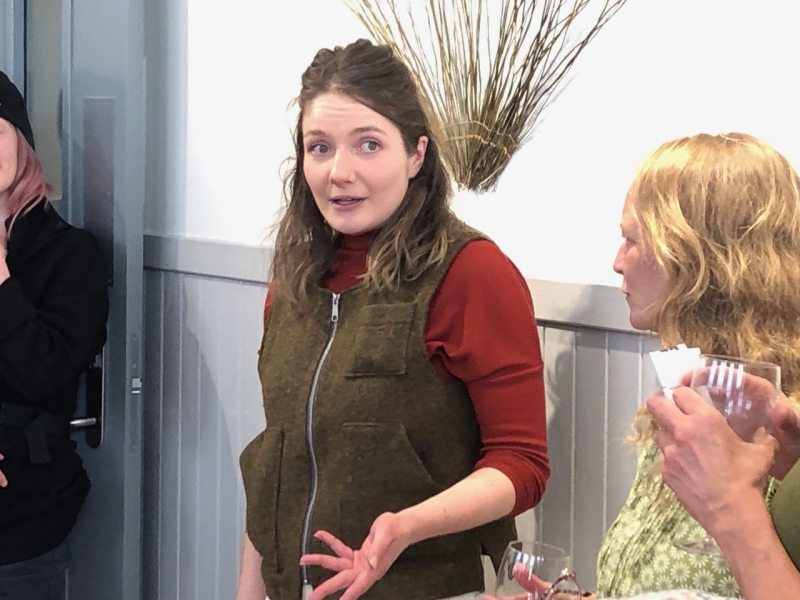
Danielle’s photography draws on traditional Hebridean culture, local stories and her upbringing in this environment. Her first series 'Guardians' emerged when Danielle moved back home to the island after graduating mid-pandemic from Glasgow School of Art. Her work has already been recognised by national magazines and organisations. She has exhibited in Scotland, Germany, and Japan.
The show is called Gorm an Fheòir (The Blue of the Grass), and merges traditional plant knowledge with experimental photographic practices to create a series of striking, landscape-toned cyanotypes. Gorm an Fheòir will be on display at Grinneabhat in Bragar until Friday 29 August.
Inspired by the traditional healing practices of the Gàidhealtachd and guided by Mary Beith’s book Healing Threads, Danielle’s work explores the deep connections between people, plants, and place.
Using the cyanotype process, she creates vivid blue images developed with UV light, then tones them with foraged medicinal plants. Each image becomes a collaboration with the land, revealing the transformative power of natural materials. The details about each painting explain which plant was used and an accompanying list details the medicinal benefits of the plants.