Residents of the Faroe Islands will gain a series of new road links later this month when three tunnels and an under-sea roundabout are set to open early following more than three years of construction.
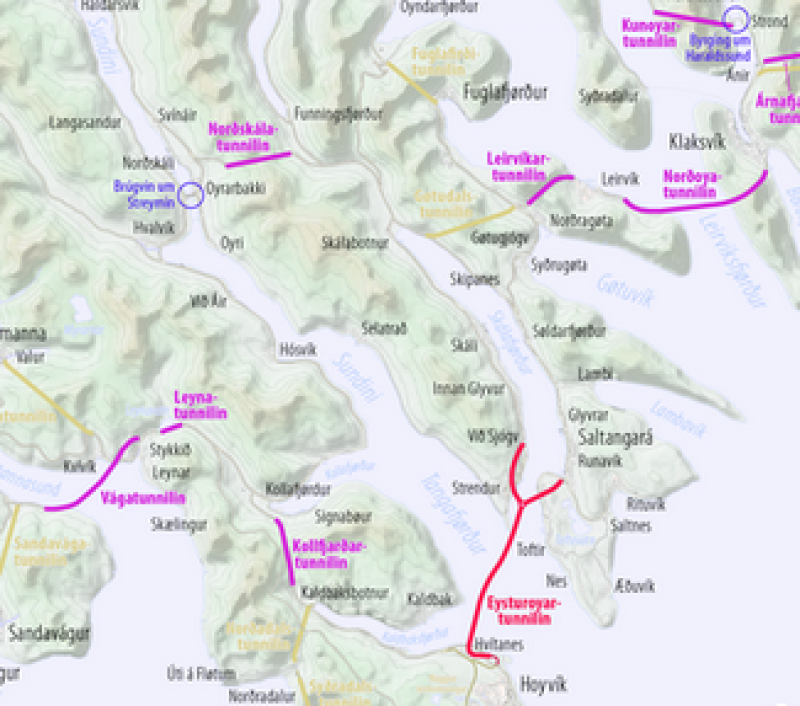
The tunnels connect the islands of Streymoy and Eysturoy in a network which totals 11km long.
The links are scheduled to open on Saturday 19 December, if tests expected on December 17 have a positive outcome, and will.cut down the travel time between the capital Tórshavn and Runavík from 74 minutes to just 16 minutes.
The cost of the project – which was mired in political controversy during its initial stages – comes to about £315m.
This compares with the costs so far run up in Scotland for the new ferry on the Uig-Tarbert-Lochmaddy triangle where the combined bill for the new ferry and associated works in all three ports comes to around £200m at present and is years behind schedule.
Those using the tunnels will be required to pay a toll. Local.fo, the Faroese news website, reports that passenger cars will have to pay 75 Danish Krona (£9.10) one way. Locals can sign up to deals which make it cheaper to use.
For comparison on the Western Isles, a road link between Leverburgh and Berneray would be about 12.8kms but could travel via intervening islands.
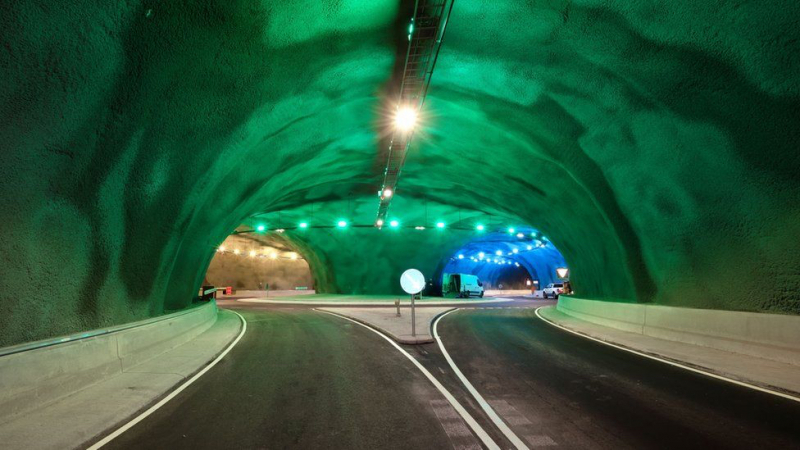
The new tunnels in the Faroes are two-lanes wide with three tubes which meet at an underwater roundabout, 72.6 metres below the surface of Skálafjørður. The tunnel is 2,153 metres long from the entrance at Rókini in Saltnes to the roundabout, and the distance from Sjógv at Strendur to the roundabout is 1,625 metres.
The main branch from Tórshavn to the roundabout measures 7,460 metres and resurfaces by the village of Hvítanes. This results in an overall road length of 11.238 kilometres, making it currently the world’s second-longest sub-sea road tunnel, surpassed only by the Ryfast tunnel at Stavanger in Norway.
Photographs: estunlar.fo
Map: Maximilian Dörrbecker